The Rise of Digital Money in Dubai: Crypto, Payments & New Regulations
Explore how digital money is rising in Dubai. Crypto adoption, smart payments, regulations, and future trends explained in a simple 2025 guide.

Learn how Bitcoin and digital assets are reshaping real estate, banking, and wealth management in the Middle East through innovation, regulation, and new investment models.
Bitcoin and digital assets are no longer niche concepts. Across the Middle East—especially in the UAE, Bahrain, Qatar, and Saudi Arabia—crypto has become a major force in reshaping investment, financial services, and property markets. As global demand shifts toward faster, transparent, and borderless financial systems, Bitcoin, stablecoins, tokenized assets, and blockchain are introducing a new era of opportunity.
From real estate transactions in Dubai to new banking models and modern wealth management strategies, digital assets are transforming how investors protect and grow their capital.
Table of contents [Show]
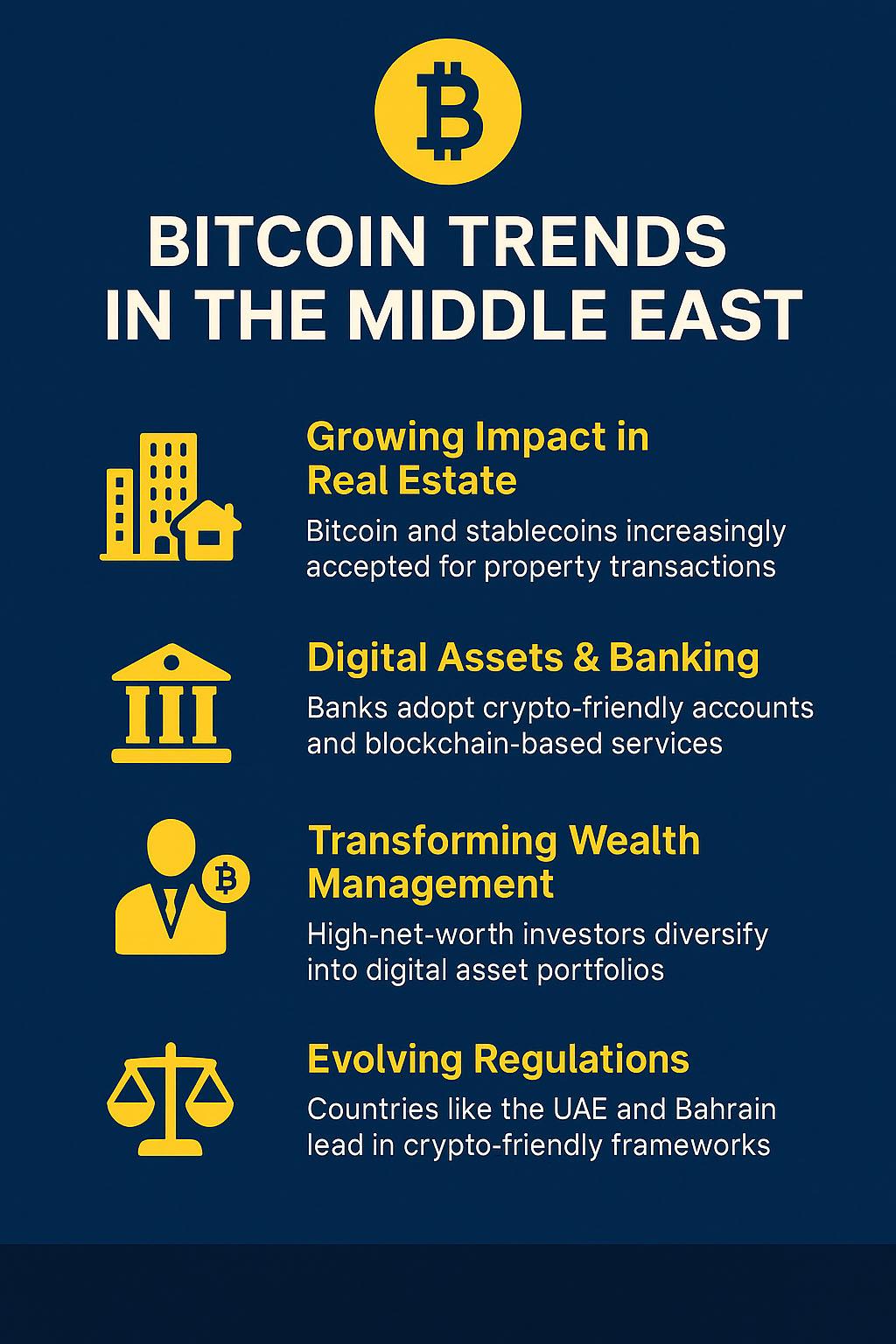
Real estate developers in Dubai and other GCC cities are increasingly accepting Bitcoin and stablecoins for property transactions. This shift is driven by:
Bitcoin transactions have become particularly common in luxury properties, including Palm Jumeirah, Downtown Dubai, Dubai Hills, and premium waterfront communities.
Banks in the Middle East are now integrating blockchain-based services, digital custody solutions, and tokenized deposits. New banking models include:
Banks in the UAE, Qatar, and Bahrain are also partnering with global fintech companies to modernize cross-border payments and reduce fraud.
High-net-worth investors are shifting part of their portfolios to digital assets. Wealth management companies are offering:
Digital assets help diversify portfolios, protect wealth from inflation, and access global investment opportunities.
The region is rapidly building a secure, investor-friendly digital asset ecosystem.
| Category | Data & Insights |
|---|---|
| Bitcoin real-estate transactions in Dubai | Up 38% in 2024 |
| Middle East crypto investors | Over 27% of foreign investors use BTC/USDT |
| UAE digital asset market value | Expected to reach $11B by 2026 |
| Blockchain adoption in GCC banks | Increased by 45% in two years |
| Crypto users in GCC | Expected to reach 24M by 2026 |
| Tokenized real estate projects | Growing at 30% YoY |
| Bitcoin ATM and OTC centers in UAE | Over 60+ active operators |
| Institutional crypto investments | Increased by 40% in 2024 |
| Digital asset regulations | UAE ranked among Top 5 globally |
| Interest in Bitcoin wealth portfolios | Up 55% among high-net-worth clients |
By enabling fast, borderless payments and attracting global investors to UAE property markets.
Yes—many allow BTC/USDT payments through regulated platforms.
Yes, when processed through licensed brokers and AML-verified platforms.
Banks are offering custody services, blockchain settlements, and crypto-friendly accounts.
UAE and Bahrain are the most crypto-friendly. Qatar and Saudi Arabia have limitations.
Real estate, commodities, or financial instruments converted into blockchain-based digital tokens.
Many investors use it for diversification and inflation protection.
No, but they are enhancing speed, security, and accessibility.
Volatility, regulatory changes, scams—use only licensed platforms.
Yes—adoption is increasing rapidly across real estate, banking, and investment sectors.

Explore how digital money is rising in Dubai. Crypto adoption, smart payments, regulations, and future trends explained in a simple 2025 guide.
Discover the real cost of living in Dubai in 2025. Rent, utilities, food, transport, schooling, and monthly expenses in a simple and clear guide.
Discover the top real estate developers in Dubai for 2025. Compare Emaar, Damac, Nakheel, Sobha, and more. Best options for buyers and investors.